Collaboration that Works: Phase 1 - What Could We Do?

Updated: Jan 4
Collaboration isn’t one conversation. It’s a process.
When organizations come together to explore shared work—whether that’s aligning programs, launching a collective initiative, or considering a full-blown merger—too often they rush to solutions before understanding the terrain.
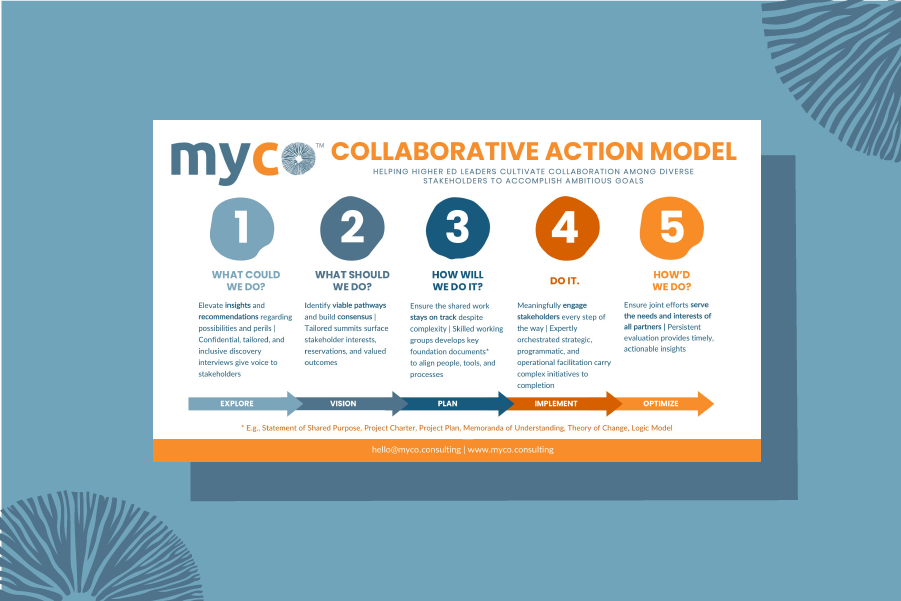
That’s why I developed the Collaborative Action Model—a five-phase framework to help mission-driven leaders navigate complex collaborations with intention, clarity, and momentum.
Over the next five newsletters, I’ll walk you through each phase of the model. You’ll learn how to sequence your collaboration efforts so big ideas lead to real-world impact.
Today, we begin with Phase 1: What could we do?
Phase 1: What Could We Do?
This is the exploratory phase of collaboration—the wide-lens, possibility-filled moment when prospective partners begin surfacing opportunities, sharing concerns, and imagining what could be.
But here’s the thing: this phase is easy to mishandle.
Too often, organizations jump straight into decision-making without first understanding the needs, aspirations, and fears of the people who matter most.
Done well, Phase 1 is like good qualitative research. It’s an intentional process of listening—to learn what’s working, what’s not, what’s possible, and what’s at stake.
Here are a few key principles:
Start by asking: Who should we hear from?
Discovery interviews are foundational. But be thoughtful about your participant list.
Yes, you want a broad range of voices—but also be mindful of time constraints, power dynamics, and the risk of defaulting to the “usual suspects.”
Ask:
Who has unique insights or lived experience?
Who might be affected by this work but isn’t usually invited to the table?
Are there voices that will be excluded unless we make a special effort?
Choose your format with care.
1:1 interviews are often the gold standard. They:
Protect confidentiality
Encourage candid input
Signal that a person’s perspective truly matters
Focus groups can work, too—but require careful facilitation to avoid groupthink or dominant voices.
Design with purpose.
Rather than rushing through a laundry list of questions, identify 5–7 strong prompts that will spark rich insight about the issues at hand.
When designing your questions, consider the domains you want to explore. For example:
What are the pain points?
What are the biggest needs?
What’s the boldest vision?
What are people afraid of?
What would justify their engagement?
Share what you learn—carefully.
Once the listening phase wraps up, synthesize the findings into themes. Look for patterns—and note where perspectives diverge (e.g., between funders and practitioners, or between newcomers and longtime leaders).
When you report out:
Protect confidentiality. Avoid quoting individuals directly or including details that could make them identifiable.
Close the loop. Let participants know what was heard—and how their input will shape what’s next.
The Bottom Line
If you want a collaborative initiative to succeed, start with discovery—not decisions.
Ask. Listen. Synthesize. Share back.
That’s how you build trust, surface real needs, and set the stage for meaningful shared work.
Stay tuned for the next newsletter in this series: Phase 2 – What should we do?
If you’re tired of disappointing collaborations that fail to meet their promise or potential, I can help. Reach out for a zero-pressure conversation about your situation. Let’s explore what better could look like—together.


Comments